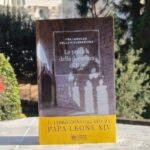
No one knows what the midterm elections will bring. While media in all forms abounds with opinions, no one knows who will be elected or how the President and his followers will respond. If one is prone to worry, there is more to be concerned about each day as wars continue, the President changes sides on Russia, and tries to buy the election in ways too numerous to enumerate.
Today’s post is about an unexpected shout-out that has become an endorsement of a book by a 17th-century monk—and why this book helps me keep hope in these unsettling times.
I was introduced to one of Pope Leo’s favorite books, The Practice of the Presence of God, through a class on the Presence of God offered by Shalem Institute some years ago. As I have aged and retired, I have returned to it each summer, rereading and meditating on its simple approach to daily life. A recent visit to a church on Long Island, where I found a new edition mentioning the Pope, piqued my interest in their connection. Last weekend, a friend told me he had two copies, so I decided to find out why the book was becoming so popular.
Pope Leo was elected head of the Catholic Church on May 8, 2025. Six months later, during an inflight press conference on his return from Turkey and Lebanon, a reporter asked what book someone should read to understand him and his spirituality.
The Practice of the Presence of God was written in the 17th century by Brother Lawrence, an unknown monk. The book is a collection of letters he wrote to people who inquired about his practice. He spent the first part of his life as a soldier before entering a monastery to get closer to God.
That decision seems to have been built on an experience at age 18 of seeing a tree barren of any leaves in the winter and marveling at the power of God to create new life and leaves each year. At the monastery, he initially struggled to get closer to God. Eventually, he developed his own approach, which he described in his letters.
Asked about writers beyond St. Augustine who influenced him, Pope Leo replied:
“It’s a very simple book, by someone who doesn’t even give his last name, Brother Lawrence. I read it many years ago. But it describes, if you will, a type of prayer and spirituality where one simply gives his life to the Lord and allows the Lord to lead. If you want to know something about me, that’s been my spirituality for many years. In midst of great challenges, living in Peru during years of terrorism, being called to service in places where I never thought I would be called to serve. I trust in God and that message is something that I share with all people.” (Vatican, December 2, 2025)
A few days later, The Vatican Publishing House announced it was publishing The Practice of the Presence of God with an introduction by Pope Leo. (Read Pope’s Introduction here.)
Brother Lawrence acknowledged that for many years he struggled to pay attention to God throughout the day, moment by moment. When he drifted from God’s presence, he would apologize and return. He believed he was better served by remaining aware of God’s presence and following its direction.
After ten or fifteen years of practice, it became easier. He lived in joy much of the time. In fact, his peers were sometimes annoyed by his joy.
My belief in God or a higher power is rooted in Love. Thus, God is the force for Love and Good in the world.
For me, that means accepting the gift of God’s love within me and in all that I experience. Practicing the presence of God means taking actions guided by Love that expand its presence in the world. Like Brother Lawrence, I frequently drift from “the presence of God”. As I practice more, the desire grows.
It is my intention to practice that Love that I find encouraging and hopeful. The world will remain challenged on many fronts. Life contains great joys, tragic disappointments, and threats. Being connected to the source of Love gives me a place to stand and a rudder to guide me. In this practice, I find hope.
 About Tom Adams