Racial Justice Conversations Monthly Meeting
Overview
At the invitation of Phil Early, Sister Simone Campbell spoke at our October 1 Racial Justice Conversations meeting. We had 42 participants on Zoom. In planning for the talk and discussion, Simone (as she prefers) and our planning coordination team arrived at the following themes:
· How do we have meaningful dialogue with people with different views (who may not be interested in dialogue) while keeping an open mind and honoring lines we won’t cross?
· How does our culture of individualism, separatism, and limited conflict resolution skills make Trump era challenges so difficult?
· How do “progressives” admit errors and develop areas of alignment with conservatives to broaden support for change?
· How do Christian values guide us in a time of Christian nationalism?
Sister Simone helped organize Nuns on a Bus in 2012 to fight for a federal budget that better served families and the poor. She was awarded the Presidential Medal of Freedom in 2022 and has extensive experience working with and for people at the economic margins of society.
The following is a summary of some of the key points she made in her presentation:
Our present context and challenges
Despite our technological advances, we are more separate and isolated than ever. Screens have become more important than relationships.
It is difficult to live a gospel-based life when we are separate.
Simone said it is difficult to accept that everything she has worked for all her life has been dismantled or is under threat. She joined the Sisters of Social Service to live and engage in the work of justice.
She thought we had made more progress and arrived at some place new. The current reality makes clear that isn’t true – it’s not the case that we are living in new relationships based on equity and respect for one another.
Her commitments and expectations are being dashed as she gets older and has less time and energy.
While admitting these realities, she was reminded of a friend’s encouraging words – think how bad it would be if you hadn’t given your life for this work.
Important to accept the disappointment and pain, and keep working for justice.
Reflections on nonviolence and nonviolent actions
What nonviolence is not:
- It is not quietly engaging in conversation with counter parts (those we agree with)
- Non-violence is not non-anger.
Engage in appropriate anger – look at historical precedents for nonviolent expression of anger
Our call is to positive anger that fuels our practice.
Meditation and deep listening are essential to hear the spirit’s movements in us. Change in us comes from nudges from the Spirit.
Examples of how to respond in the moment and listen to the Spirit’s guidance:
- Her order started a Rapid Response Committee to be able to respond quickly to justice issues when needed
- As women of prayer, she and her colleagues can act from that prayer and respond to these times in ways that are not violent and are assertive.
Our call is to be assertive about our Chirstian values. She offered the following examples:
- Sisters of Charity in New York challenged Cardinal Nolan of New York comparing Charles Kirk to St. Paul. Media picked up their opposition and made clear the disconnect between Chirstian values and much of what Charles Kirk said and did.
- All her order’s nuns, including the older and retired ones, wrote to Chief Justice Roberts and encouraged him to make decisions based on his Christian values.
- Her order opposed the Big “Ugly” bill by asking relatives in crucial states to write to their Congressional leader to oppose it.
- Pope Francis’ letter to US bishops shortly before he died encouraged them to embody the gospel. Sister Simone and her order sent this letter to local bishops and asked them what they were doing to live up to this letter.
- Cardinal Robert McElroy’s (Washington DC) sermon on September 28, 2025 as part of the 111th Day of Migrant and Refugee Mass where he talked about our responsibility to protect those on the margins and the poor. He used the Good Samaritan parable to ask: “Who is our neighbor? What is ours to do?”
- Pope Leo’s response to criticism or Cardinal Cupich of Chicago for supporting recognition of Senator Durbin’s immigration reform work even though he voted for pro-life legislation. Pope Leo defended Cardinal Cupich and urged looking at the whole person, all the issues and caring for 100% of the gospel. Our faith is bigger than a single issue.
Prayer that brings us to positive action
How do we maintain a prayer life that brings us to positive action?
Realizing that slapping back is about me and not from our prayer
Prayer is holy curiosity – asking questions and not leaping to judgment
Challenges of dialogue groups of conservatives and progressives – is there curiosity and openness among all. If no curiosity or openness, low likelihood of progress or success.
Nonviolent means positive actions that are possible with others.
We do this in community; can’t do it alone. We all have bad days. We need to bolster each other and find a way forward together.
Suggested Anchor for praying and considering nonviolent action – Pope Francis’ five points in his Exhortation on Holiness
- Perseverance and meekness (meekness defined as willingness to learn from one another). Jesus didn’t give up.
- Maintaining joy and a sense of humor (the utter foolishness of this administration)
- Passion and boldness (be people of principle)
- Being in community (hope is a communal virtue)
- Living in constant prayer – always being open to the Spirit/prayer that wells up within us. God is not in places; God is everywhere and holds us together at every moment. Connect with God everywhere.
Conclusion
We are the ones our nation is waiting for.
Closing Poem written by Sister Simone
Loaves and Fish by Sister Simone Campbell, Sisters of Social Service
I always joked
that the miracle of loaves
and fish was sharing.
The women always knew this.
But in this moment of need
and notoriety, I ache, tremble
almost weep at folks so
hungry, malnourished,
faced with spiritual famine
of epic proportions. My heart
aches with their need.
Apostle like, I whine:
What are we among so many?”
The consistent 2000-year-old
ever-new response is this:
“Blessed and broken, you are
enough.” I savor the blessed,
cower at the broken and
pray to be enough.
Sister Simone Campbell, SSS
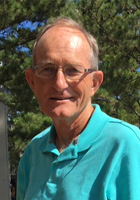 Tom Adams writes and speaks on topics vital to the intersection of our personal lives with our community and global lives. He has for decades been engaged in and written about nonprofit leadership and transitions, spirituality and spiritual growth, how we each contribute to a more just and equitable world and recovery from addictions and the Twelve Step recovery movement.