Editor’s Note: Today’s post is a continuation of a series of reflections on America’s 250-year celebration and its meaning and call to action. Stef McGuire, a North Carolina advocate transplanted from Connecticut, shares how she spent the 4th and why it reinforced her laser focus on voting rights and voting.
I struggled with how to celebrate our nation’s 250th birthday. I had purely joy-filled memories of July 4, 1976. Do you have your own? My heart-warming memories are sitting on the water’s edge of Baltimore Harbor on the Fourth of July as eight tall ships from around the world paraded into the Inner Harbor. The following days were filled with visits to the Inner Harbor, to gaze at them by day and night and enjoy the special visitors.
I knew in my heart, though, that July 4, 2026, had to be celebrated in a meaningful way. Apparently, I was not alone. On April 7, the University of Massachusetts Amherst published a national public opinion poll reporting that a majority of Democrats polled either “weren’t thinking about it” or saw it as an opportunity to reflect on “unfinished work.” Ultimately, our family focused on that “unfinished work” by visiting the International Civil Rights Center and Museum in Greensboro, North Carolina, on July 4.
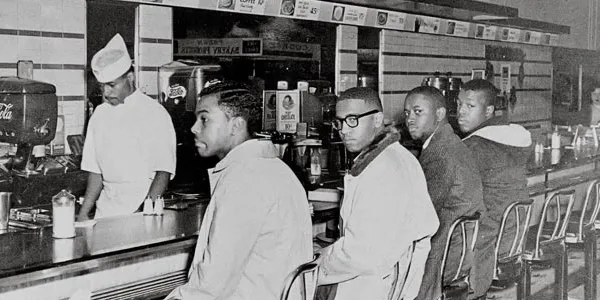
Greensboro was the site of the Woolworth’s lunch counter where four Black college students from North Carolina A&T State University sat at a whites-only lunch counter on February 1, 1960, launching a nationwide protest movement for desegregation. The lunch counter, with its 1960s-priced menu, still stands as the centerpiece of a comprehensive display of the painful, unfinished struggle for civil rights in America.
The tour’s focus on the struggle for the right to vote was especially compelling because, two days earlier, I had attended a North Carolina State Board of Elections public testimony session on proposed election rules that will directly impact North Carolina voters, especially those of color. One powerful testimony came from a North Carolina A&T student who urged the Board to reconsider changes that would restrict Sunday voting, early voting, and impose noise limitations outside polling places, among other restrictions. These changes appear to target strategies successfully promoted by Black faith communities to encourage voter participation, such as Souls to the Polls. Passion in that young woman’s voice echoed in my head as I walked through the Woolworth’s building. This experience renewed my personal resolve to defend the equal rights of all, especially those who have historically been marginalized to vote.
What happens now, after the Fourth of July celebrations have come and gone? Now we’re faced with issues demanding our attention leading up to Election Day: November 3, 2026. Changes to election laws are being introduced in federal and state legislatures. These state changes will affect your local election laws and how your local board of elections operates.
The day-to-day activity is admittedly time-consuming to follow. Yet legislators and election board members are aware of the watchful eyes of voter rights organizations and engaged citizens. The evidence is sometimes as simple as how they choose to publicize their meetings and decisions. Now is the time to support watchdog activities, either through your own vigilance—attending board meetings and offering public comments—or by supporting reliable voter protection organizations such as Common Cause and the Fair Elections Center.
Ultimately, the defense of our rights depends on Americans voting. This message seems so basic, doesn’t it? For that very reason, it is the one we must repeat and share with others. An overwhelmingly decisive result in November makes an election much more difficult to contest. Numbers count—up and down the ballot. We have all seen the consequences of failing to secure down-ballot offices. That has altered the balance of power among Congress, the White House, and the Courts. All are essential to protecting our democracy.
How do we ensure our vote?
- Register to vote. Keep in mind that voter registration requirements have changed in some places.
- Check your registration. Do you need to update your address or name? Does your name match your passport or driver’s license? Does your state now require additional information? Start early and make sure your registration is current to help ensure your vote will be processed smoothly.
- Make your voting plan. Early voting has become the most common way to vote in 47 states and the District of Columbia. Besides convenience, early voting helps reduce long lines and gives voters time to resolve any registration problems before Election Day. Nonpartisan organizations such as the League of Women Voters offer tools to answer many related questions. As you make your plan, consider:
- When does early voting start and end?
- Where can you vote early?
- Where is your Election Day polling place on November 3, 2026?
- Is your polling place the same location as your early voting site? (Some states allow voting at any early voting site but require voters to use their assigned precinct on Election Day.)
- Talk about voting with your friends and neighbors. Have they checked their registration? Are they ready to vote in the primaries and on November 3? Encourage them to make a voting plan, then check in with them before Election Day.
Lastly, GET OUT THE VOTE!
Exercising our constitutional right to vote is the most sacred way to contribute to our nation’s future.



Great action plan to get as many people as we can to the polls. We all have to work at it! here in Spain we are volunteering with
Democrats abroad working intensively to make sure every American living overseas understands their right to vote and the process’s because of course it’s more complicated. And as you might expect most Americans abroad are more likely to have experienced more diversity, equity, and inclusion overseas, and therefore are more likely to vote democratic.
Thanks Greg, you continue to amaze me with the richness of your life in Spain. Thanks for helping get out the vote!
Absolutely, Greg. No doubt the new North Carolina rules target oversees voters too. A lot more hoops!
Just like in the States, we all must support one another. Glad to hear it’s working!
Thanks Stef, for getting this conversation going on Critical Conversations and reminding us how changing the rules is part of suppressing the vote and get informed and vote!