Addictions are America’s most costly and least fully acknowledged health crisis. The direct and indirect costs to the person with the addiction—be it alcohol, drugs, gambling, overeating, technology, or work—and their family are staggering and still not fully quantified in any comprehensive way.
There are more than 200 medical-related conditions resulting from excessive drinking, according to the US Government’s National Institute of Health. Alcoholism is the third leading cause of death in the United States; 484 people die each day from alcohol-related causes.
Tragically, the true cost of addiction isn’t measured only in death. It’s measured in lost years of healthy life, interrupted and traumatized childhoods, and millions of working hours quietly disappearing from the economy.
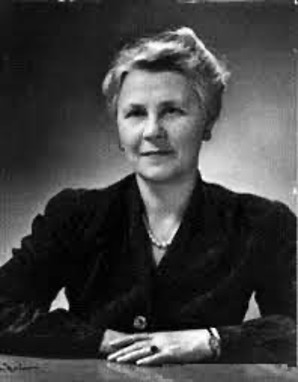
March 4th is Lois Wilson’s birthday. She died at the age of 97, seventeen years after the death of her husband, Bill Wilson, co-founder of Alcoholics Anonymous. Sadly, most people don’t know Lois and her legacy of love and service—how she changed the world. If we want to understand and address the broader costs of addiction to families and communities, we must study her life and the organization she co-created with her neighbor, Anne Bingham in 1951– Al-Anon Family Groups.
I came to admire Lois slowly. Like many in recovery, I once viewed her mostly as Bill’s wife. I knew she helped start Al-Anon, but I understood little about what that required.
Learning about her legacy taught me not to fear life, but to savor it. Understanding Lois and her work is critical to slowing the incalculable costs of addiction on families and society.
Here are some lesser-known truths about Lois Wilson, co-founder of the Al-Anon Family Groups
- Lois grew up in Brooklyn with privileges not afforded many children or women of the early twentieth century. Her father was a physician; her mother was distantly related to the Rockefeller family. She was well educated and gifted. Yet neither privilege nor education kept her from treating everyone with dignity and love. She opened her home to those seeking help from alcoholism and its effects in spite of the chaos more than one newly sober or relapsed alcoholic caused. She and Bill modeled service without distinction as to class, race, or education.
- Lois was strong and resilient. She and Bill loved the outdoors, hiked in New England, and once traveled the country by motorcycle and sidecar while Bill investigated investment opportunities.
- She stayed married to Bill through seventeen years of destructive drinking for many reasons. She loved him deeply. She grew up in the Swedenborgian faith, which emphasized marriage, love, and service. Divorce was far less realistic for women in that era. Lois later acknowledged her own unhealthy dependence early in their marriage.
- She had her own spiritual awakening. After once throwing a shoe at Bill and shouting, “Damn your old meetings,” she began to confront her arrogance and limiting beliefs. She embraced the Twelve Steps and committed to emotional and spiritual growth. Prayer and meditation became central to her life.
- Lois and Bill frequently expressed their love for one another. Passionate courtship letters were followed by annual anniversary letters and, in later years, celebratory anniversary trips to the Waldorf in Manhattan.
- Like Bill, Lois was a writer. She kept detailed diaries, experimented with magazine articles when Bill was unemployable, and later wrote her memoir in 1979, Lois Remembers. She helped shape the early communication and policies of Al-Anon.
- Lois was a leader who understood she needed others. She saw herself as one among many, and that conviction shaped Al-Anon’s structure. She often reminded her friends in Al-Anon that anyone could begin something, but it took many people to sustain it.
- Her focus on the family disease and recovery was new ground before it was known that alcoholism is systemic and intergenerational within families. For many, public awareness of the intergenerational nature of alcoholism is still misunderstood or unknown. Lois and Bill had no children, a deep personal disappointment for her. The founding of Alateen in 1957 for young people living in families affected by alcoholism became one of her great joys and commitments.
- Lois lived to be ninety-seven. She remained intellectually curious and active in AA and Al-Anon into her nineties. Her generous spirit kept her traveling widely in service to both programs of recovery.
- She ended her memoir with words that capture her journey:
“I used to believe thinking was the highest function of human beings. The A.A. experience changed me. I now realize loving is our supreme function. The heart precedes the mind.” (Lois Remembers, p. 196)
You most likely know someone impacted by alcoholism or other addictions. You may even be part of a family that has been affected. Established facts are that one in four children in the US are living with one or both alcoholic parents and every alcoholic affects at least four people.
Lois’s life offers more than history—it offers a path. Al-Anon continues her quiet revolution of love, courage, and shared wisdom. Learning about Lois is not merely an act of remembrance; it is an invitation. An invitation to healing for families. An invitation to emotional, mental, and spiritual growth. An invitation to stop fighting addiction alone.
On her birthday, perhaps the best way to honor Lois is simple: learn about Lois and Al-Anon, attend a meeting, share her story, or reach out to someone who is struggling. As Lois reflected at the end of her memoir, Lois Remembers, the heart precedes the mind. Loving is still our supreme function. And that love may be the most powerful antidote we have to the ravages of addiction.
For further information about Al-Anon Family Groups, visit www.al-anon.org. To learn more about Lois and Bill Wilson and the births of Alcoholics Anonymous and Al-Anon, read A Marriage that Changed the World: Lois and Bill Wilson and the Addiction Recovery Movement.




Thank you, Tom and your Co-Author, Joy Jones, for bringing Lois Wilson out of the shadows. Her generation was expected to take a backseat to the men they married—let them drive and acquiesce to wherever the road led them. Your book , A Marriage that Changed the World, was eyeopening to say the least. Lois was riding shotgun all those years, sometimes at great risk to her own comfort and security. It’s possible that AA and Al-Anon and all the groups they spawned might’ve existed without the Wilsons. But it’s hard to imagine a world without them and without their life’s work.
Thanks Shelley, indeed there is no AA without Lois. Nor is there any hope for families and Al-Anon. And without Bill, Lois likely would not have takent this path. So we are all blessed they came together and co-created with Dr Bob and Anne Smith and Anne Bingham what they did!