This week’s post is part of a series aimed at increasing awareness about how families are impacted by addictions and how they recover. Most days I experience painful evidence of alcoholism and other addictions being passed from generation to generation. Learning and writing about the birth of Alcoholics Anonymous (A.A.) and Al-Anon Family Groups (Al-Anon) and the addiction recovery movement they spawned is one way to hopefully slow this cycle and pass on awareness of recovery to current and future generations.
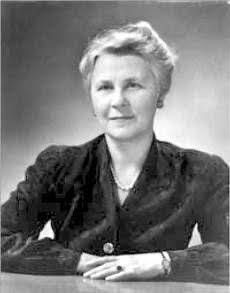
May marks the beginning of the 75th anniversary of Al-Anon Family Groups, a Twelve-Step program for family and friends of alcoholics. Without Lois Wilson and her leadership, Al-Anon would not have developed and grown as it has. Lois often pointed out that it isn’t difficult to start something. The real challenge is keeping it going and relevant to the needs of Al-anon members. To do so, she acknowledged the roles of Anne Smith in the early Family Group era, Anne Bingham, Al-Anon’s co-founder, and other pioneers in the development of Al-Anon. Future posts will explore the contributions of others. Today I will share why Lois Wilson may be one of the most under-acclaimed women leaders of the 20th century.
To understand Lois, it’s necessary to allow her to have her own identity, to separate her from her well-known husband Bill Wilson. Bill was indeed an organizational and spiritual visionary who shepherded the birth of A.A. from two men meeting on Mother’s Day in Akron to a worldwide fellowship that has sustained itself for over 90 years. This is an amazing feat for any group of people, particularly given the wide range of personalities and experiences among A.A. members around the world.
Lois is much more than Bill’s loyal and, for some, too-faithful wife. She combined common sense with deep spiritual roots and organizational wisdom to adapt A.A. to become Al-Anon.
In many ways, she had a more difficult path than Bill. Before many can appreciate Lois’ unique role, an answer is required to the frequently asked question: why did she stay with Bill through 17 years of progressively worsening alcoholic drinking and his recurring lengthy depressions even after sober?
Learning about the facts of Lois’ childhood, religious beliefs, and family roots makes it clear she stayed for reasons beyond codependency and the legal restrictions on what women could and couldn’t do in the early 20th century. Lois loved Bill deeply. Her love grew over the 50-plus years of their marriage. Lois’ grandfather was a minister in the Swedenborgian religion, a Christian faith. She was brought up practicing this religion, which believes deeply in the central roles of marriage and service. Lois embraced these teachings which her parents modelled and lived them in her marriage.
Lois’ parents were unusual for their time. Her father, Clark Burnham, was a gynecologist; her mother, Matilda Hoyt Burnham, was considered by those who knew her “a saint” in her kind and loving disposition. Lois learned to be open with her affection and expressions of love and to seek to love and forgive. Her mother, in a deathbed conversation with Lois, was concerned that Lois lived forgiveness too well. She encouraged her to take care of herself and not try so hard to love Bill. She expressed concern that her daughter not become bitter for the life she was missing by staying with Bill. Although Lois heard her mother’s deathbed concerns, she chose to stay with Bill.
A few years later, not long after Bill’s massive spiritual transformation that led to his sobriety, Lois was shocked to learn she was unhappy even though Bill was sober. She had to face what she called her own arrogance and recognized she, too, needed to live by the same Twelve Steps Bill and his new sober friends were embracing.
Think about this moment. You are married or related to someone whose drinking, drug use, or gambling is out of control. You see the collateral damage to you, your children, nieces, and nephews. Why would you consider giving up your anger, sadness, or self-pity? It is a lot easier to blame the person with the addiction than to change one’s own attitudes and behaviors.
That’s the decision Anne Smit, Lois, Anne Bingham and others made. Lois led the broadening of the spiritual tool kit developed by A.A. to new horizons that allowed hundreds of thousands over time to make this same decision — to focus on themselves and their spiritual and emotional growth and to learn to detach with love from the person with the addiction.
From the decision to bring together the more than 80 informal “family groups” and co-found Al-Anon, Lois lived her life from 1951 until her death in 1988 in love and service to Al-Anon and A.A. (For more details on her contributions, see my post honoring her birthday this past March.)
Lois ended her memoir Lois Remembers with a simple quote that sums up her life: “I used to believe thinking was the highest function of human beings. The A.A. experience changed me. I now realize loving is our supreme function. The heart precedes the mind.” (Lois Remembers, p. 196)
For further information about Al-Anon Family Groups, visit Al-Anon Family Groups. To learn more about Lois and Bill Wilson and the births of Alcoholics Anonymous and Al-Anon, read A Marriage that Changed the World: Lois and Bill Wilson and the Addiction Recovery Movement, available on Amazon books and book stores everywhere.




0 Comments